
Trip Overview
Duration of trip: 8 days, 7 nights
Season: Autumn (end of October)
Mode of transport: Car
Route summary
Day 1: Budapest → Gradiška → Jajce
Day 2: Jajce → Plivsko Jezero → Sarajevo
Day 3: Sarajevo
Day 4: Sarajevo: Olympic sites → Mostar
Day 5-6: Mostar & Millennium Cross hike
Day 7: Day trip: Kravice Waterfalls, Blagaj, Počitelj
Day 8: Mostar → Budapest
Places That Capture Your Heart
There are places that simply steal your heart. I’ve realized that no matter how much you read about a place before traveling, you can’t truly feel it until you’re there. Everything I had read about Bosnia before traveling felt different in person — I was completely drawn in from the moment we crossed the border, as if stepping onto a road back to the 1990s.
First Impressions in Gradiška
We entered Bosnia through Gradiška and immediately felt as if we’d stepped into a town from the 1990s—maybe because of the old bridge you cross right after the border, or perhaps because of our own preconceptions about the Balkans.
After spending some time on the road toward Banja Luka, we began to notice the flags flying everywhere. They didn’t look like the Bosnian national flag. A quick internet search led us into a pool of new information, as we learned about one of the most complex political systems in the world – but more on that later!
On the Road to Jajce
There was a big traffic jam near Banja Luka, and we soon realized that Google Maps isn’t very up to date in this area. Banja Luka is the second-largest city in Bosnia and Herzegovina and the administrative center of Republika Srpska. When we were planning the trip, we had considered stopping there, but in the end, we decided to spend our first night in Jajce. It turned out to be the best decision — just outside the town, we found a lake that looked like an autumn wonderland.
Traveling at the end of October, the landscape past Banja Luka looked straight out of an autumn fairytale. If you love mountains and forests, Bosnia is the perfect place for you!
Jajce – Between Waterfalls and Autumn Magic
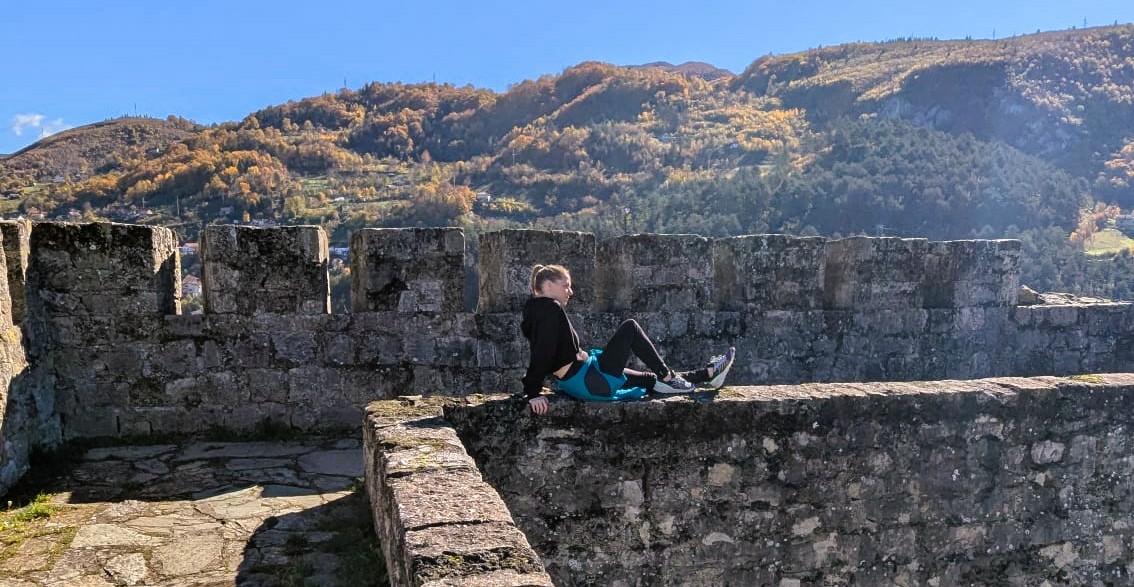
Jajce is famous for its stunning waterfall and its charming old town filled with narrow streets, a white mosque, cozy restaurants, and cafés. At the top of the hill stands a 14th-century fortress with a beautiful view of the town below.


However, what truly stole our hearts was Plivsko Jezero (Pliva Lake). It’s only about a 10-minute drive from the town, heading toward the Mlinčići water mills. We took a short walk from the Plivsko Jezero restaurant to the mills, and the scenery was simply breathtaking. Since it was that time of year, aside from the restaurant and the water mills, we were completely alone by the lake.
You can also enjoy the view of the lake from the restaurant Plivsko Jezero.


Sarajevo – Meeting of Cultures
We spent the afternoon by the lake before heading towards Sarajevo. As a mountain lover, I was immediately captivated by the city, surrounded by the Dinaric Alps, with houses scattered across the hills. We arrived in the late afternoon, and it was already getting dark. Located on top of a hill, our accommodation overlooked the city. In the evening, we could hear the calls to prayer from the mosques.
In the morning, we took the adventure of navigating the streets—without sidewalks—down to the city center. Sarajevo breathes history in every corner, from the old Ottoman era to the site of the Latin Bridge, where Gavrilo Princip assassinated Archduke Franz Ferdinand, and all the way to the more recent and tragic history of the Bosnian War. The symbols of that war are subtle yet unforgettable—they blend gently into the city’s corners: Sarajevo roses marking sites of shelling, and the white cemeteries that appear throughout the city and the country.
From the Yellow Bastion, you can look down on a city of merging cultures, where East meets West. Walking through Baščaršija, keep an eye out for a small inlaid marker reading “Meeting of Cultures”, a reminder of the city’s long history of coexistence. Knowing the history of the recent war, the message feels both heavy and hopeful at the same time, and it stays with you long after you leave.


Sarajevo: A History to remember
As I mentioned earlier, once you start learning about the country’s history and political situation, you will definitely find it impactful. In Sarajevo, there are several museums worth visiting, but I highly recommend the free walking tour we took — not only did we learn about the city and its culture, but it also gave us a clear introduction to Bosnia’s history, the Bosnian War (1992–1995), and the complex government structure established by the peace agreement: the central state government and the two autonomous entities, the Federation of Bosnia and Herzegovina and Republika Srpska. Later, we visited the War and Genocide Museum in Mostar, and it was truly devastating.
You should also visit the site of the 1984 Winter Olympics. The remnants of this major event in recent history now sit quietly, surrounded by nature, creating a fascinating mix of history and landscape. If you’re traveling by car, think twice before following Google Maps to the top of the mountain—it might have its own idea of a shortcut!


Mostar, the land of pomegranates
After our Olympic adventure, Google Maps finally found the safest way down the mountain, and we headed toward Mostar. After a short stretch on the highway, we soon found ourselves back on winding roads between hills and small villages, each with a mosque in the center. The route took us past bigger and bigger mountains, running alongside a crystal-clear river.
To keep the story completely real, here comes the downside — we had a small accident while taking a left turn. The car skidded and hit the edge of the road. Luckily, no one was hurt, though it gave us quite a scare. Somehow, everything worked out — with the help of the police who appeared out of nowhere, Google Translate, and our wonderful hosts, we managed to get the car fixed in just two days.
While the car was being fixed, we took the time to explore Mostar — one of the most visited places in Bosnia, located near the southern border with Croatia. It’s the city of Stari Most, the Old Bridge, a UNESCO World Heritage Site. Mostar is more touristy than Sarajevo, but as you wander through the old town, stroll along its narrow streets, and browse the little shops in the bazaar, you can still feel its charm. The memories of the war are also visible here: buildings with bullet holes, and the knowledge that the bridge itself was destroyed and later rebuilt.
This part of the country felt more Mediterranean. The trees had returned to shades of green, the weather was sunny, and we were surrounded by our favorite fruit trees — pomegranates.


Millennium Cross trail
We had originally planned a bigger hike, crossing the border to reach the highest peak of Croatia, but after the accident, we decided to spend more time in Mostar. Instead, we did a smaller hike along the Millennium Cross Trail.
When you arrive in Mostar, you’ll notice a huge cross on top of the mountain overlooking the city. It is a 33-metre-tall cross built on Mount Hum. At first, hiking up there looked quite challenging, but after some searching we found the trail. Most people go up via the paved mountain road, but there is also a well-maintained hiking path. It’s mostly rocky, so not the easiest route, yet it’s doable in about two hours and offers fantastic views of the city. The hiking route starts here:
You should always prepare properly for a hike, but in Bosnia it’s even more important. Before starting, I was a bit worried because you can read a lot about the remaining landmines in the country. It’s difficult to find clear information about the areas that are still contaminated. There is an official app with warnings and maps, and in known contaminated zones there are red mine-warning signs. Still, everyone advises never to stray from clearly marked trails, as mines can be hidden. The hiking route was marked and seemed safe, and we followed the path all the way.


Finding Peace in Počitelj
On our last day, we visited some nearby spots: Kravice Waterfalls, Blagaj, and Počitelj. Blagaj and the Kravice Waterfalls are beautiful, though even more touristy than Mostar. To be honest, we felt that the waterfall had lost some of its charm, with the entrance fee, paved path, stairs, and lakeside cafés making it feel a bit too built-up. I expected it to feel more natural. Maybe in summer it has a different vibe.
On the other hand, we absolutely loved Počitelj. This small medieval town sits on the hills beside a crystal-clear river and was almost completely empty. We could hear the mosque’s afternoon prayers while taking in the view, surrounded by stunning nature — it felt so peaceful.


On the Road Home
We decided to head home to Budapest through Bosnia instead of Croatia, giving us a little more time to enjoy the autumn mountains and the charming villages tucked into the hills. Shortly after passing Sarajevo, we spotted a cozy roadside restaurant that comes highly recommended — Restoran Lovac, a perfect spot to refuel.
Highlights and Recommendations
Timing: October added a special touch to the trip. Visiting Mostar outside the peak summer months is preferable — even in October, it was still quite crowded.
Local people: Even though we had to use Google Translate a few times, we met incredibly kind people everywhere.
Cultural experience: The call to prayer added a special tone — in Sarajevo, when several mosques sounded together, or in Počitelj, where a single mosque echoed through the calm nature.
Vegetarian – vegan food: Options were limited. As our walking tour guide joked, “if you’re vegan, God help you!” Surprisingly, the best vegetarian meal we found was in a medieval restaurant in Mostar. We missed visiting Café de Alma, a small coffee house next door, but I’ll definitely go if I ever return.
Brunch lovers: Try URBAN Taste of Orient – Mostar — the food has a hint of the Orient, and the terrace view makes it even better. Be prepared for usual brunch prices.
Sarajevo treats: At Dzirlo Tea House, on the street leading up to the Yellow Bastion, I felt transported to the old days of traders, especially since we ended up speaking with the owner in Italian.