
Trip Overview :
Duration of trip: 5 days, 4 nights
Season: Spring (end of April)
Mode of transport: Wizzair BUD-TIR, bus
Route summary:
- Day 1: Budapest → Tirana
- Day 2: Tirana – Lake Bovilla
- Day 3: Tirana
- Day 4: Tirana → Berat
- Day 5 : Berat → Tirana → Budapest
How Places Change With Us
I am becoming more and more convinced that travelling to places you have visited before is really interesting. Sometimes, I wish we could see them again through the same eyes we once did, because then we would truly notice how much those places have changed and developed over time. What do you think?
I first visited Tirana in 2019, although only for half a day before catching a flight back to Budapest. Back then, my first impression of the main square was completely different from what I experienced this time.
After the pandemic, Tirana experienced a boom in tourism, and you can notice it at first sight — even more so when you start walking through the streets of the city center.
Navigating Tirana
Arriving from the airport to the city center — and, honestly, travelling around the country in general — can be a bit tricky. Private buses operate on most routes, but there is very little clear information about schedules and timings. The routes can also feel quite complicated, especially in Tirana and the surrounding suburban areas. The city simply was not prepared for the number of vehicles circulating nowadays.
Since we were planning several day trips from Tirana to the surrounding areas, we decided to book a free walking tour for our first day. The tour was very informative, and the guides were very flexible — we switched to the Spanish-speaking group just before it began because we felt more comfortable with it.
Tirana: From the Past Toward the Future
It is very interesting how this country evolved in such a different way compared to Bosnia and Herzegovina. It starts with the story of their national hero, Skanderbeg, who is clearly a key figure in the country’s national identity. His importance surprised me, especially considering that he lived in the 15th century. He shaped the national identity in opposition to the Ottomans, something that, as a Hungarian, resonates with me.
It is also interesting that religion is not such a central part of the national identity, despite the fact that several different religions are practiced in the country. The people we talked to said they are proud of the acceptance and coexistence of different faiths. You can see mosques around the city, but they create a very different atmosphere compared to Bosnia. In Tirana, we only heard the call to prayer once so the mosques seemed to blend quietly into the everyday rhythm of the city.
One of the funny things about Tirana — something I didn’t really like the first time, but found interesting now — is the mix of completely different building styles scattered all around the city. Later on, while thinking about the city, I realized it reminded me of a puzzle. Learning about the very strict communist period after World War II made me think that these buildings reflect a burst of creativity that came once communism ended. My personal favourite was the building shaped like the head of Skanderbeg.


Blloku
It was a nice surprise to find out that our accommodation was in Blloku, the city’s new trendy neighbourhood. During communism, the area was restricted to politicians only, but nowadays it is full of restaurants, bars, cafés, and hotels. The variety of restaurants is impressive — very similar to Budapest — and you can find almost every kind of cuisine, usually at slightly lower prices.
A City of Macchiatos
I was also impressed by the coffee culture in Tirana. For a coffee lover, it is a real paradise. There are new-wave cafés as well as traditional small coffee shops and bars, but almost every second place is a café. I grew fond of the macchiato, which is the most commonly ordered coffee here.
I love the coffee culture, because even though the Balkans are generally known for good coffee, I was never able to get used to Turkish coffee. Here, there is a clear Italian influence with espresso, but with the difference that people spend hours sitting over a coffee — something that feels much closer to my way of enjoying it.
In general, I feel there is a lot of Italian influence in the country — in the hospitality and in the way people interact, which is very welcoming. I can feel that they are happy to receive tourists and want to improve their hospitality. Almost everyone tries to speak English or Italian with tourists, even if it is just a few words, and the young people working in hospitality speak very good English.
Among the new-wave cafés, we tried SMALL and HANA Corner Cafe, but just stepping into any random café is also a great choice


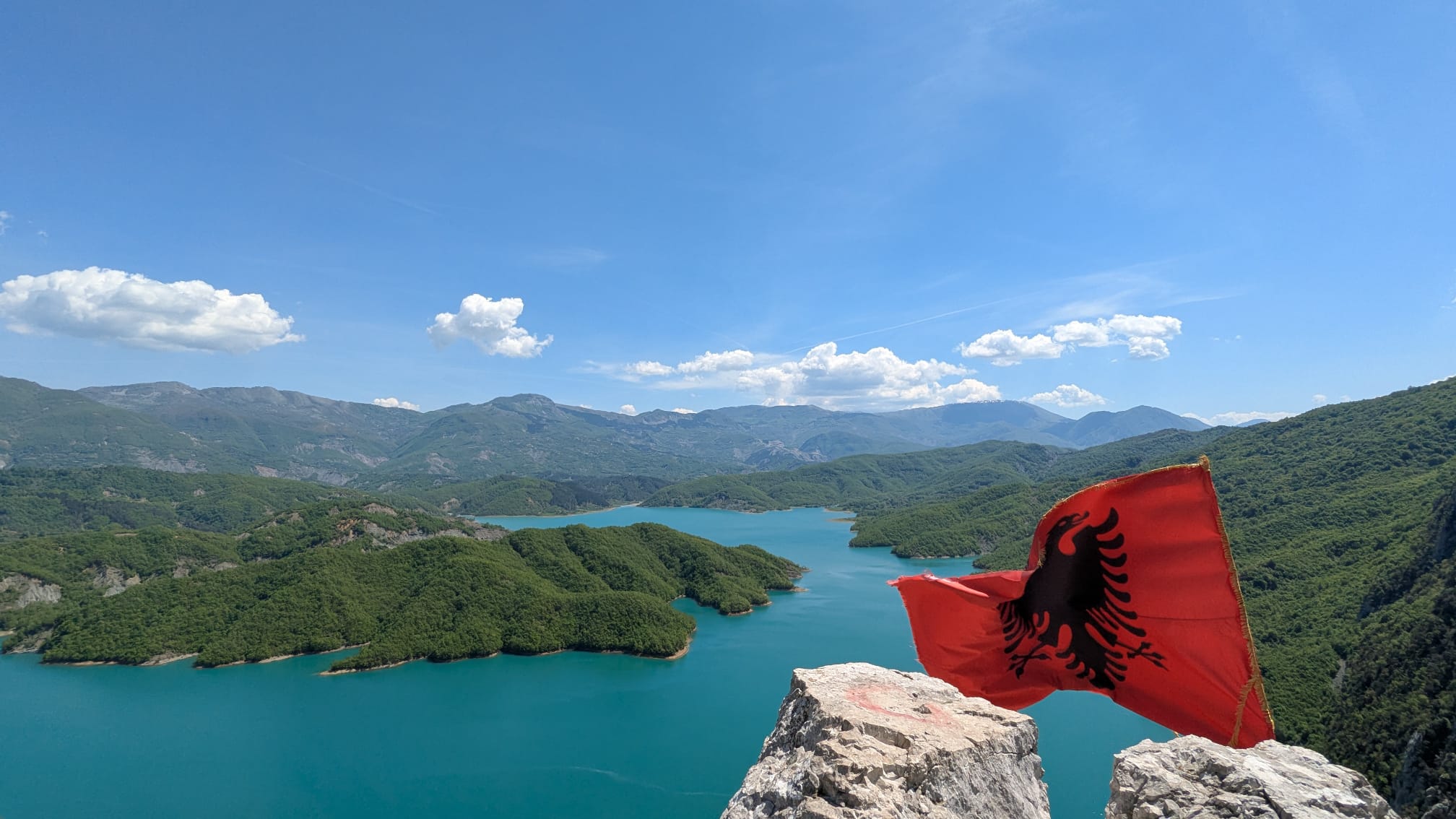
Bovilla Lake: A Quick Mountain Escape
On the second day, we did a half-day tour to Bovilla Lake. Around eighty percent of the country is mountainous, so even though it was a short trip, I couldn’t leave without seeing some mountain scenery.
We looked into different options to get there — renting a car or using public transport — but public transport basically doesn’t exist outside Tirana, and driving there is also a real challenge because of the road conditions, so joining a tour was the best choice.
The tour guide gave an interesting presentation during the bus ride. He was very open, answered questions, and even let us go ahead of the group when we arrived at the hiking area. Most of the route is easy, with metal stairs, so you don’t need to be particularly prepared. However, there is a cliff at the end of the trail that makes the experience especially rewarding for those who enjoy a bit of climbing, aside from the beautiful views.


Bunk’art
On the third day, we originally planned to go to Kruja, a small town near Tirana with a bazaar and a castle, but we felt like one day was not enough in Tirana, so instead we went for brunch, visited the city market, and, as it was raining, it was the perfect day to explore the bunkers — remnants of the communist era.
Bunkers in Albania are like landmines in Bosnia, memories of a painful history. The communist leader, convinced that the country would be attacked, built countless bunkers throughout the country. Now, the two in Tirana have been turned into museums. Bunk’Art 1 is especially worth visiting. Prepare yourself for an incredible amount of shocking information about World War II and the communist era.
Berat: A Mountain Fairytale
We booked a night in Berat, a city in the south-central part of the country, which in theory is about two hours from Tirana by bus, but in reality takes closer to three hours when traffic is heavy. Private buses run from the bus station every day, and while there are timetables online, they are not always reliable.
The old town, with its small white houses spread across the hill, is part of the UNESCO World Heritage, and it truly feels like walking through a little mountain fairy tale of medieval streets.
The view from the castle is incredible — the only challenge is the climb. The whole city is incredibly charming. We found a great spot for coffee in one of the restaurants inside the castle. The city is full of small, home-made traditional restaurants, where we could try local food for cheaper prices than in Tirana. There are also very good vegetarian options.
At night, the whole city is softly lit, and with the glow of the streetlights it is very pleasant to stroll through the small streets.
We agreed that we would have spent more time in Berat if we had known how great it was. I am sure there will soon be more and more activities to do in the surrounding mountains.


Highlights and Recommendations
Timing: We were lucky there was only one rainy day, but the weather was already warm, especially on the hiking day. In summer, the city gets very hot and more touristy, so for me, spring is a good choice.
Local people and cultural experience: I was impressed by the hospitality of the people in general. They are usually kind and willing to help if they see you are a tourist. Apart from the transport and the roads, I felt like the country is moving in a very positive direction. Transport can be tricky, but it can also lead to unexpected experiences, like hopping on a bus while it is stopped at a red light. When travelling back from Berat to Tirana, we even managed to flag down a bus from the street, and they picked us up.
Food and restaurants: In Tirana, there is a wide variety of food options, and the national cuisine is very good, with some vegetarian choices.
A new-wave restaurant offering bowls and burgers — and one of the best bowls I have ever tried. Everything feels fresh and healthy, with both vegetarian and meat options available.
Near Bunk’Art 1, there is a small fish restaurant with a few tables that serves excellent food. I had the best seafood linguine I have ever tried.
Friendly House in Berat
A restaurant with homemade food, like being invited into someone’s home. We tried traditional vegetarian dishes — stuffed peppers and aubergines — with the best oven-baked potatoes.